Tabriz Persian Rugs: A Tradition of Detail, Design, and Craftsmanship
Continuing our rug education series, we’re highlighting one of the most recognized and respected names in hand-knotted weaving: Tabriz Persian rugs.
If you’ve spent any time around fine handmade rugs, you’ve likely heard the name Tabriz. For many collectors, it’s considered one of the benchmark weaving centres - known for precision, intricate detail, and an impressive range of designs.
Where Tabriz Rugs Come From
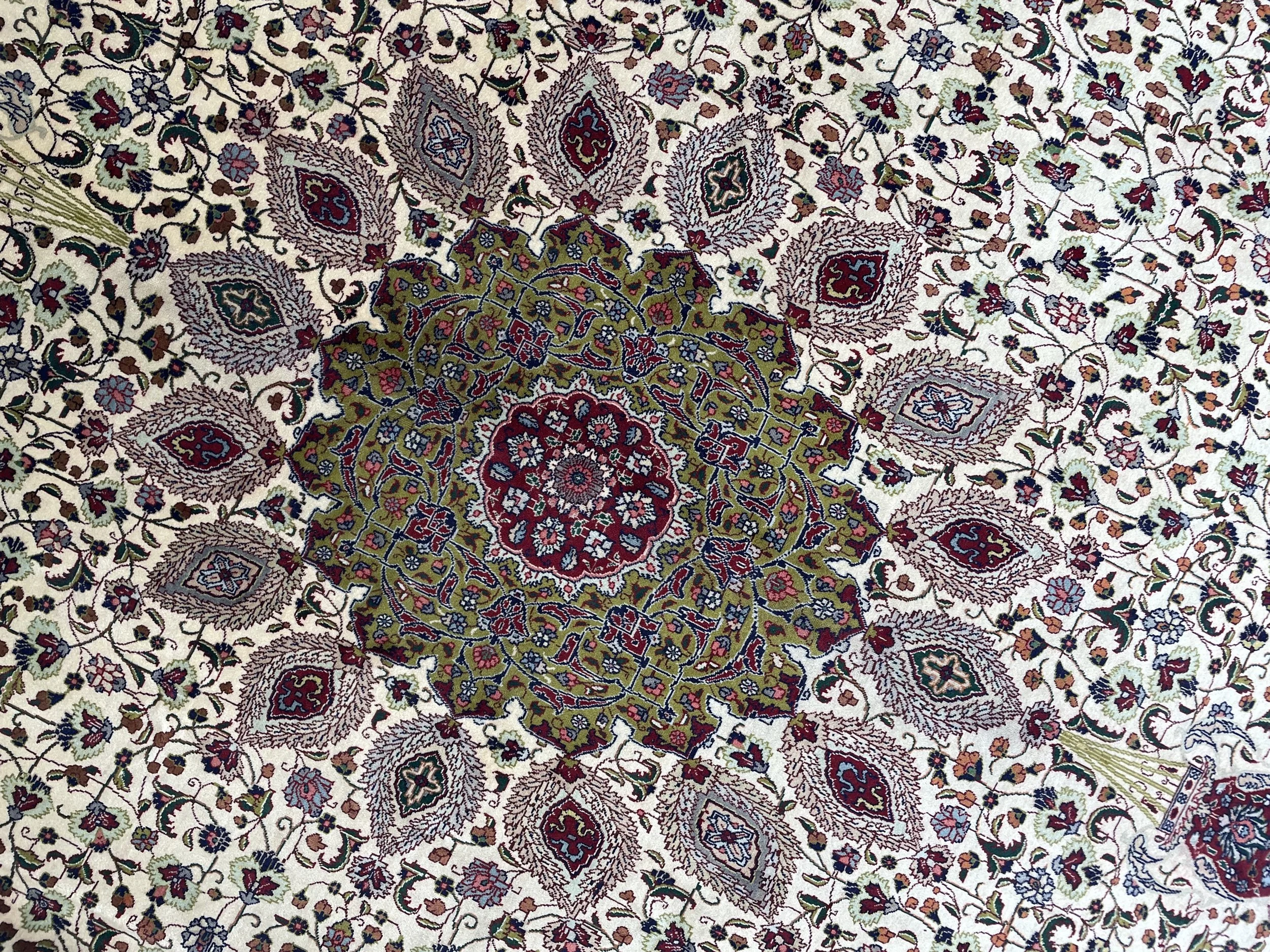
Tabriz is an ancient city in the northwest, historically positioned along major trade routes. Because of its location, it became a natural hub for commerce, culture, and artistic exchange - all of which helped shape its weaving tradition.
Over time, Tabriz developed into one of the most prolific and influential carpet centres in the world. Many experts even consider the greater Tabriz area to be among the birthplaces of refined rug weaving as we know it today.
A Deep Weaving History
Tabriz’s rug-making tradition goes back centuries, but it reached new heights during the era of the Safavid dynasty. During this period, royal workshops were established and carpet weaving was elevated to a true art form.
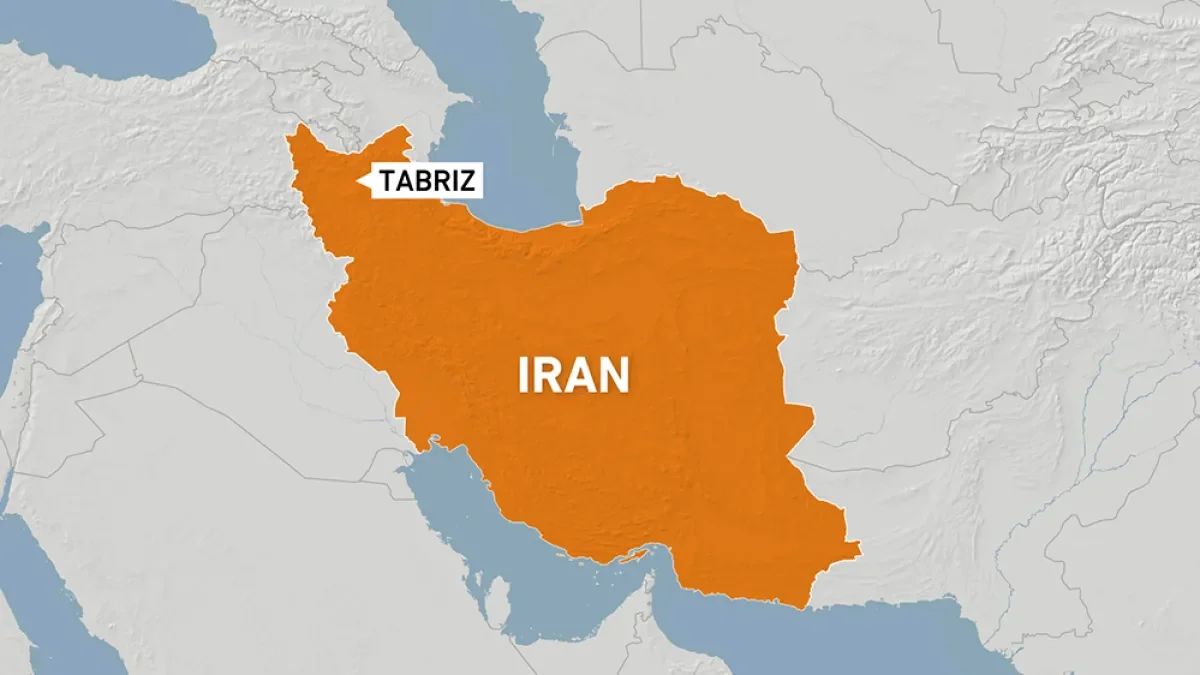
Designs became more sophisticated - intricate medallions, elaborate florals, architectural inspirations, hunting scenes, and finely balanced geometric layouts. Even today, many Tabriz rugs reflect that classical influence. It’s a tradition that has been preserved and refined rather than reinvented.
Why Tabriz Rugs Are So Well Known
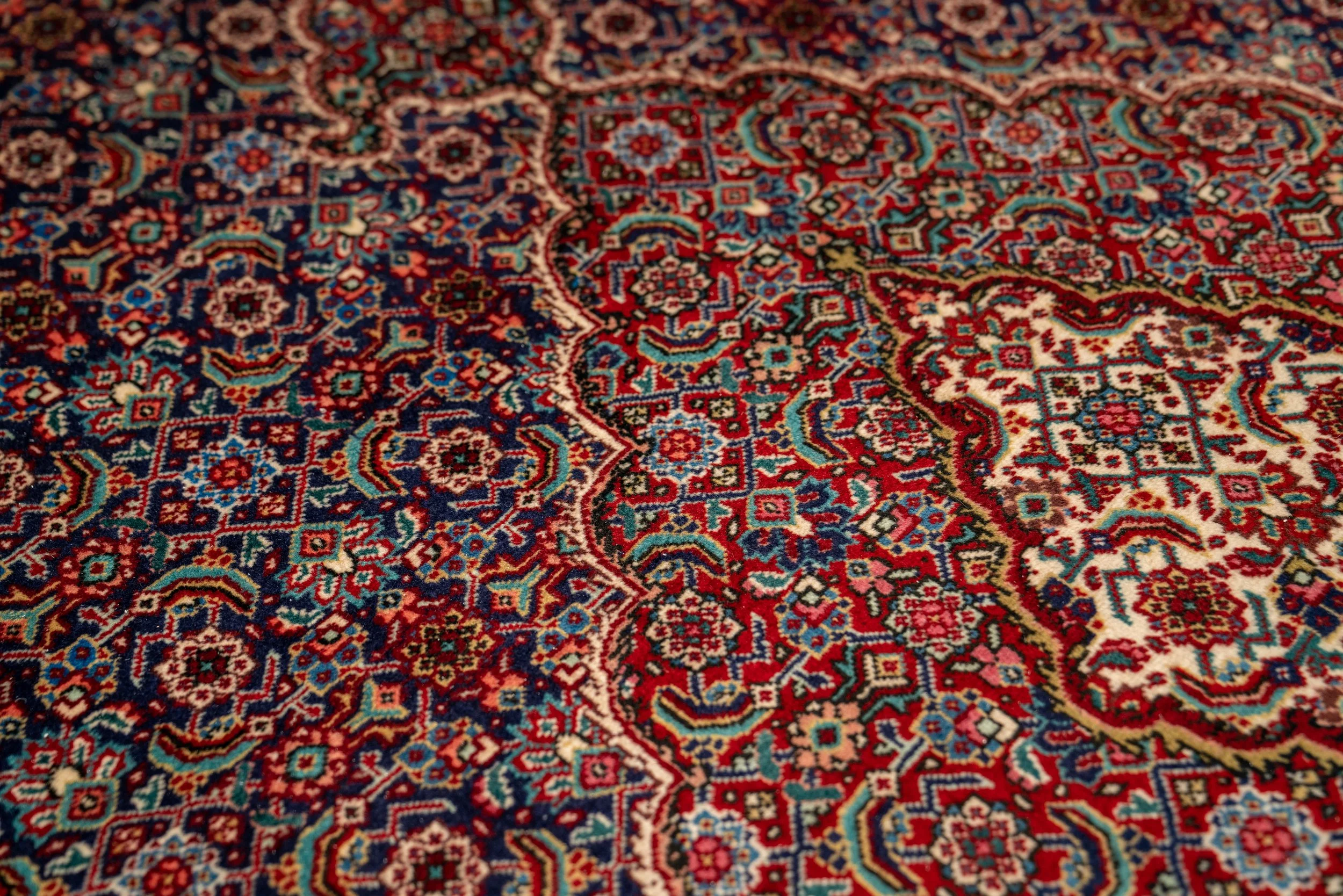
In the hand-knotted rug world, Tabriz is one of the most recognized names. Antique and high-quality vintage pieces are especially sought after by collectors, but even modern fine Tabriz rugs are respected for their craftsmanship.
Part of that reputation comes from consistency. Tabriz weavers are known for precision. The patterns are clear, balanced, and carefully executed. On exceptional pieces, master weavers sometimes incorporate a subtle signature into the border - a quiet nod to the pride behind the work.
Quality & Construction
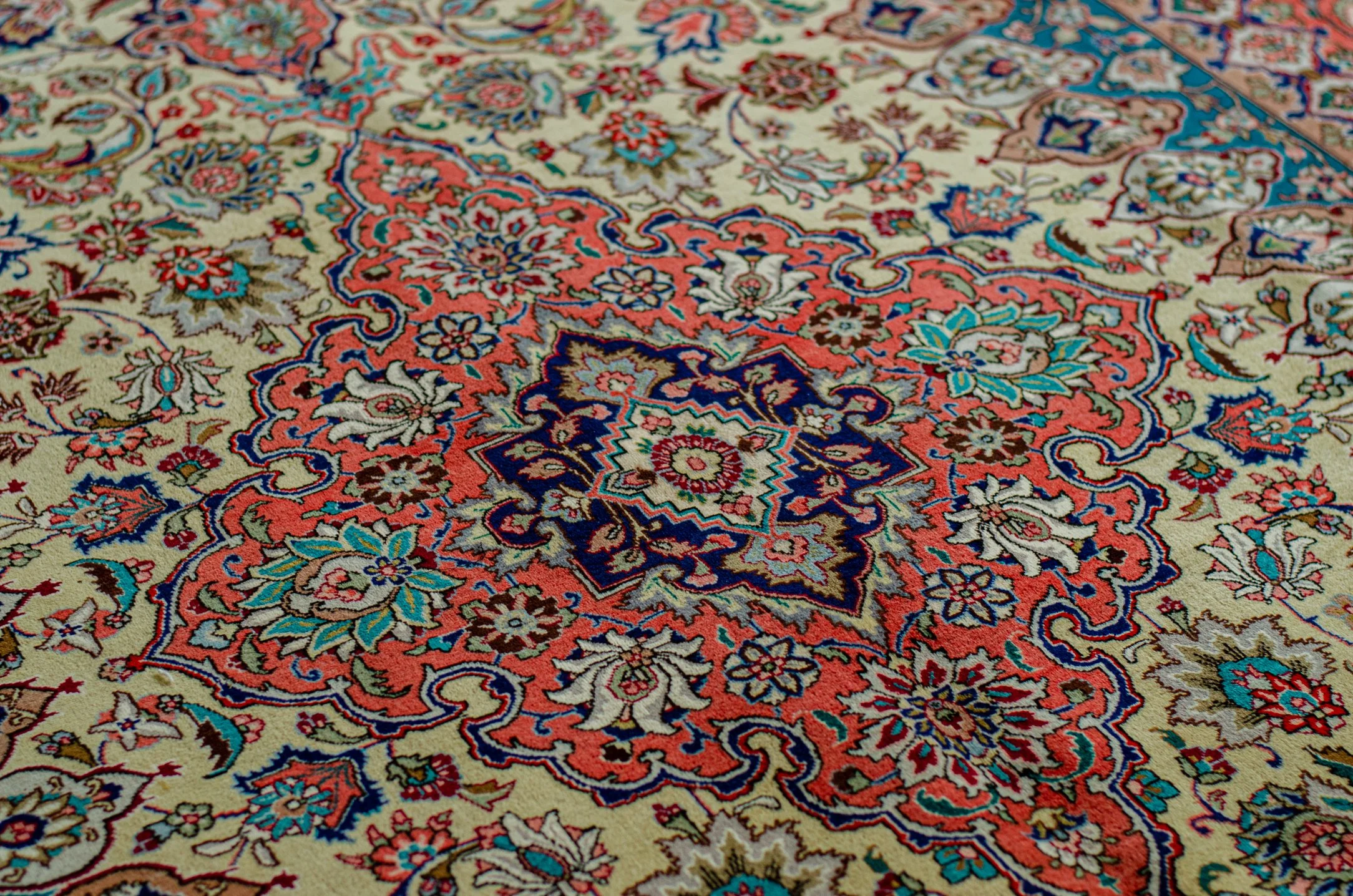
One of the defining features of Tabriz rugs is their tight knotting. Many are woven with high knot counts, which allows for remarkable detail and sharp pattern definition. You’ll commonly see:
Wool on cotton foundation – durable and structured
Wool and silk on cotton foundation – silk highlights add depth and subtle sheen
Wool and silk on silk foundation – finer and more intricate
Full silk construction – extremely detailed and luminous
Fine examples often use soft kurk wool, which gives the rug a smoother finish and helps showcase the detail in the design. Silk is often used to outline motifs or emphasize floral elements, creating light and dimension within the pattern.
Design Variety: From Florals to Pictorials
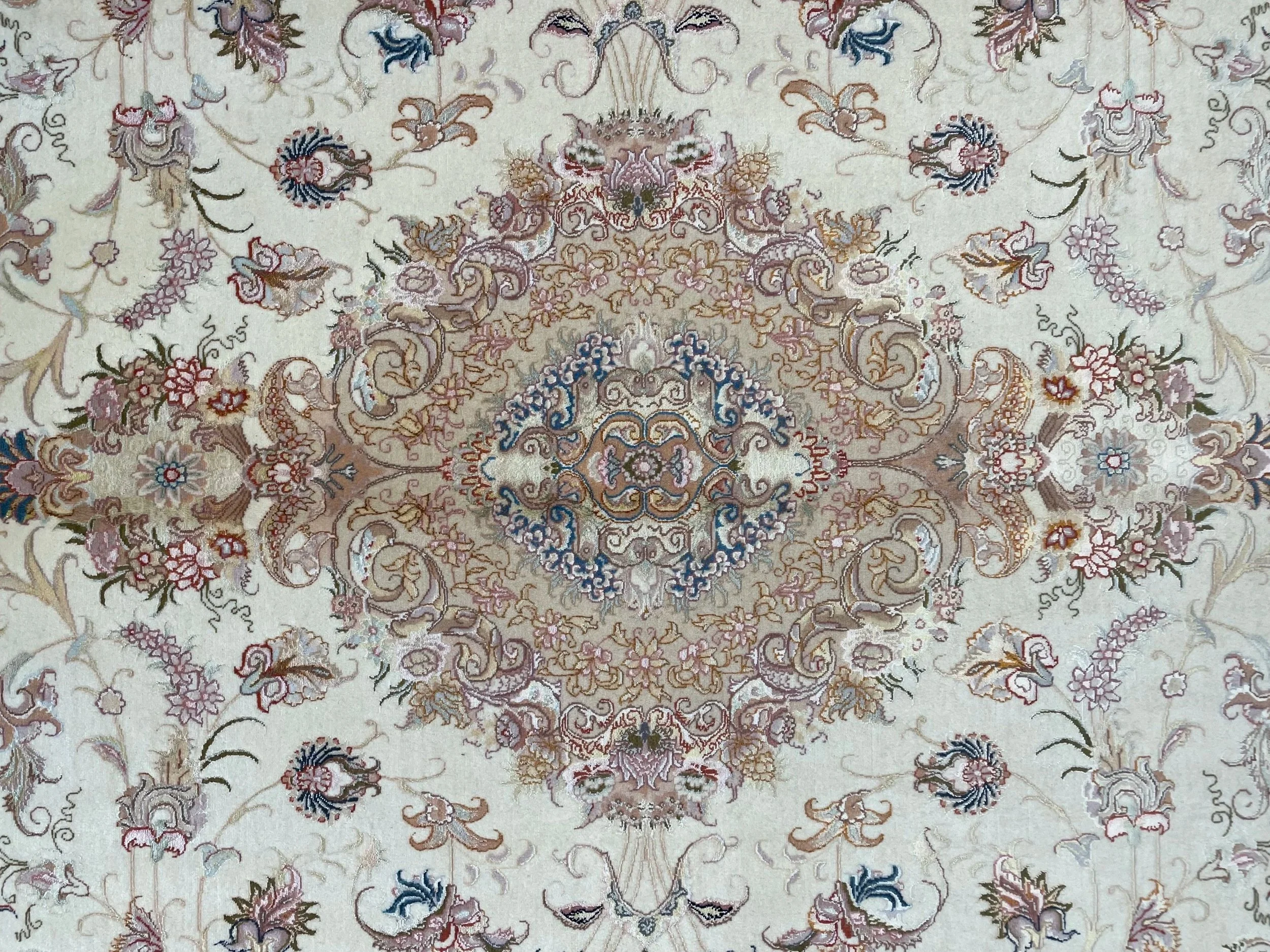
One of the things that sets Tabriz apart is the range of designs. While some weaving traditions are known for one signature look, Tabriz workshops produce a wide spectrum of styles. Common designs include:
Dense floral fields filled with scrolling vines
Large palmettes and layered medallions
All-over patterns without a central medallion
Hunting scenes and detailed pictorial rugs
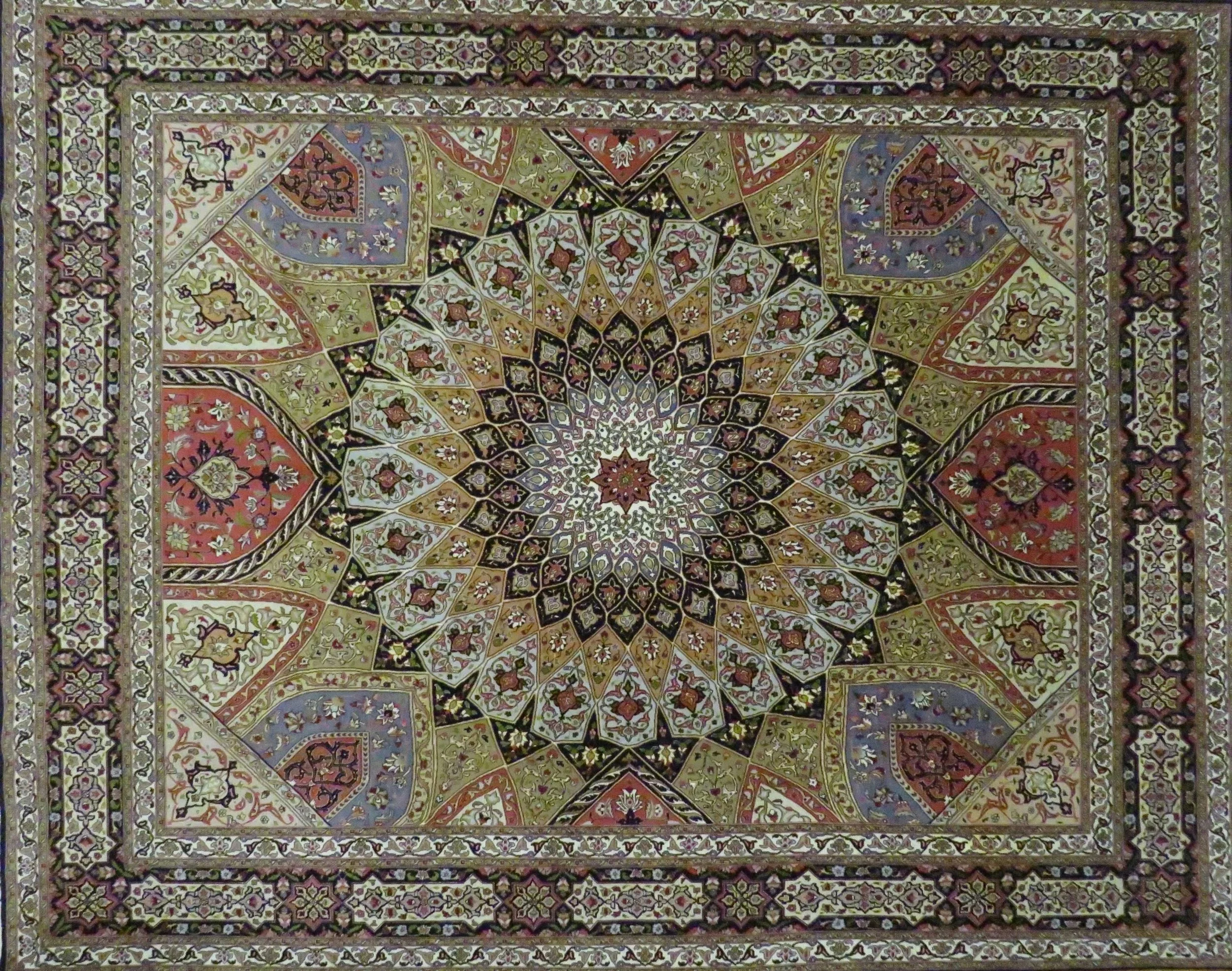
Architectural “dome” layouts inspired by mosque ceilings
Structured geometric patterns
Because of this variety, Tabriz rugs can feel traditional, formal, refined, or even surprisingly versatile depending on the design and colour palette.
Tabriz Mahi Rugs
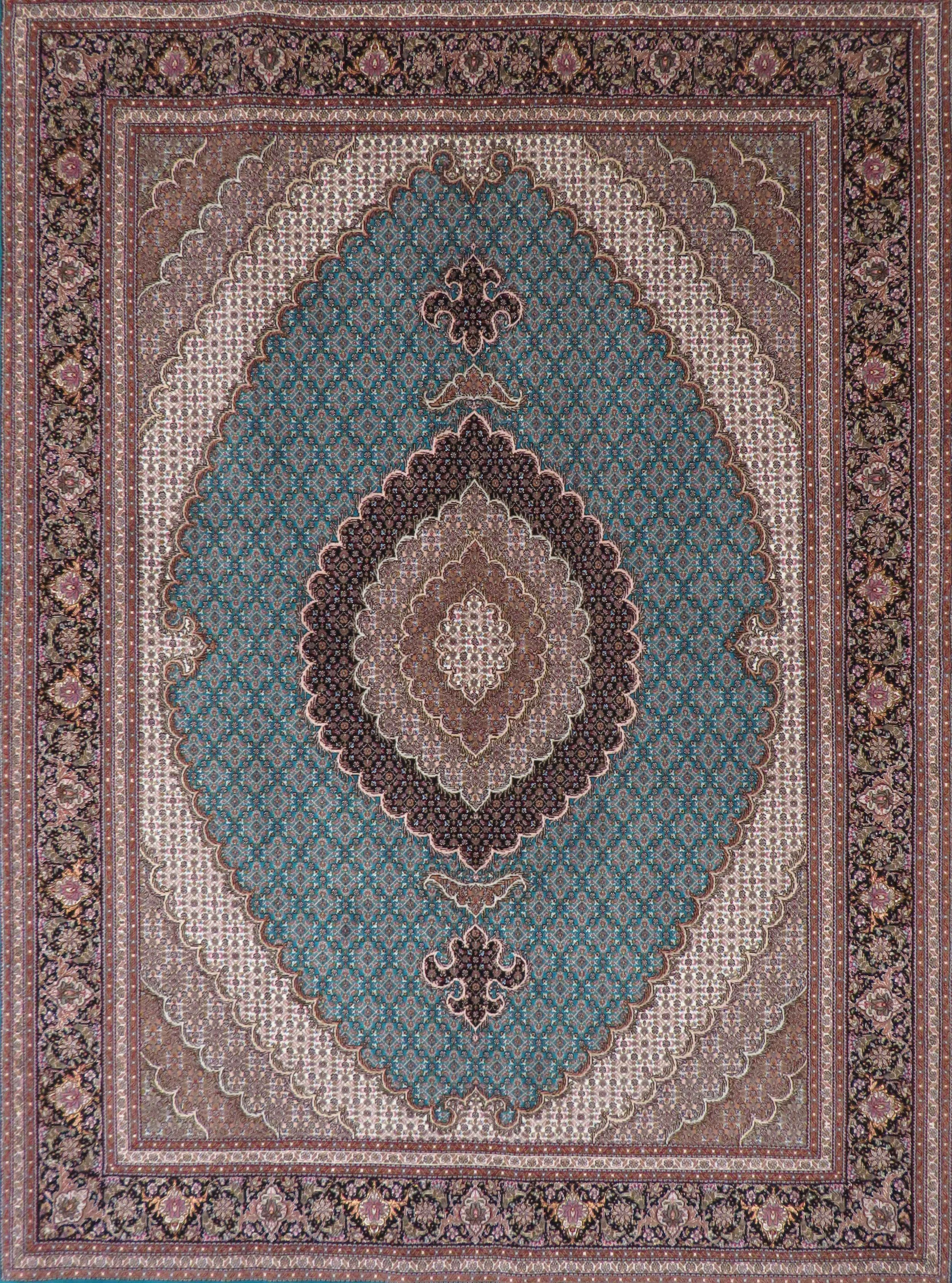
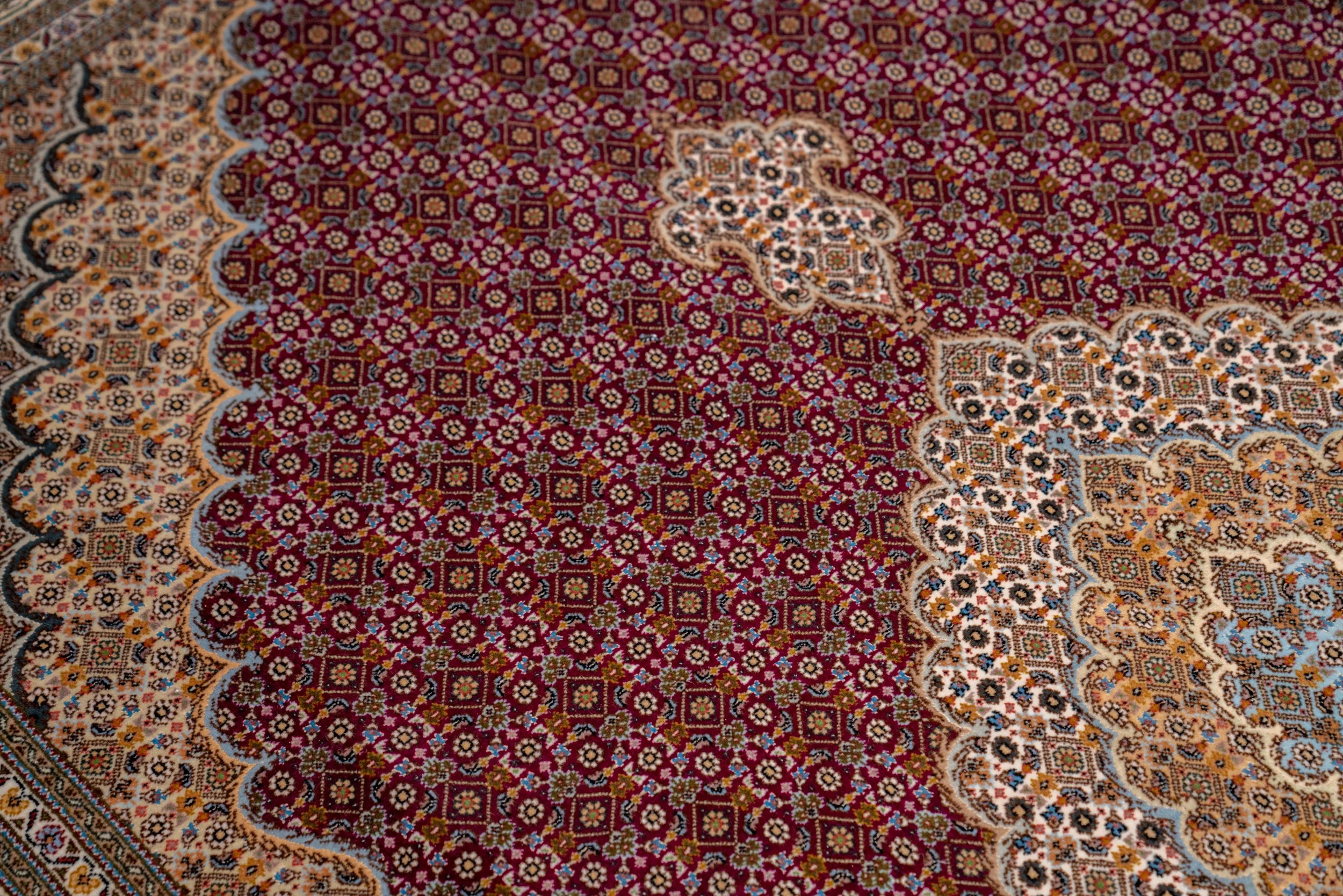
One of the most recognizable styles is the Tabriz Mahi design, often linked to the Herati pattern. The word mahi means “fish,” referring to the small repeating motifs that surround a central diamond or floral element.
Herat is historically associated with the origin of the Herati pattern, but Tabriz weavers developed their own highly refined interpretation. Tabriz Mahi rugs are typically tightly woven, symmetrical, and often done in coordinated tones
Why Collectors Value Tabriz Persian Rugs
When you step back and look at the bigger picture, the respect for Tabriz rugs comes down to a few core things:
They’re woven in Tabriz, one of the most important historical weaving centers.
They rose to prominence during the Safavid dynasty, when carpet weaving became true fine art.
They’re known for tight knotting and clear, intricate designs.
They’re made in a range of constructions - from durable wool pieces to incredibly fine silk examples.
And they offer an unusually wide range of patterns, from floral and geometric to pictorial masterpieces.
Tabriz Persian rugs represent technical skill, artistic depth, and centuries of tradition - all woven into one piece. Whether you’re drawn to a classic medallion design or a refined Mahi pattern, a well-made Tabriz rug carries both history and craftsmanship in every detail.