
How to Tell if a Persian Rug Is Handmade
If you’re shopping for a Persian rug, one of the most important questions to ask is whether it’s truly handmade. Authentic hand-knotted Persian rugs are crafted knot by knot on a loom, often taking months to complete. Machine-made rugs, on the other hand, are mass-produced in a fraction of the time.
Understanding how to tell if a Persian rug is handmade can help you avoid overpaying and ensure you’re investing in genuine craftsmanship.
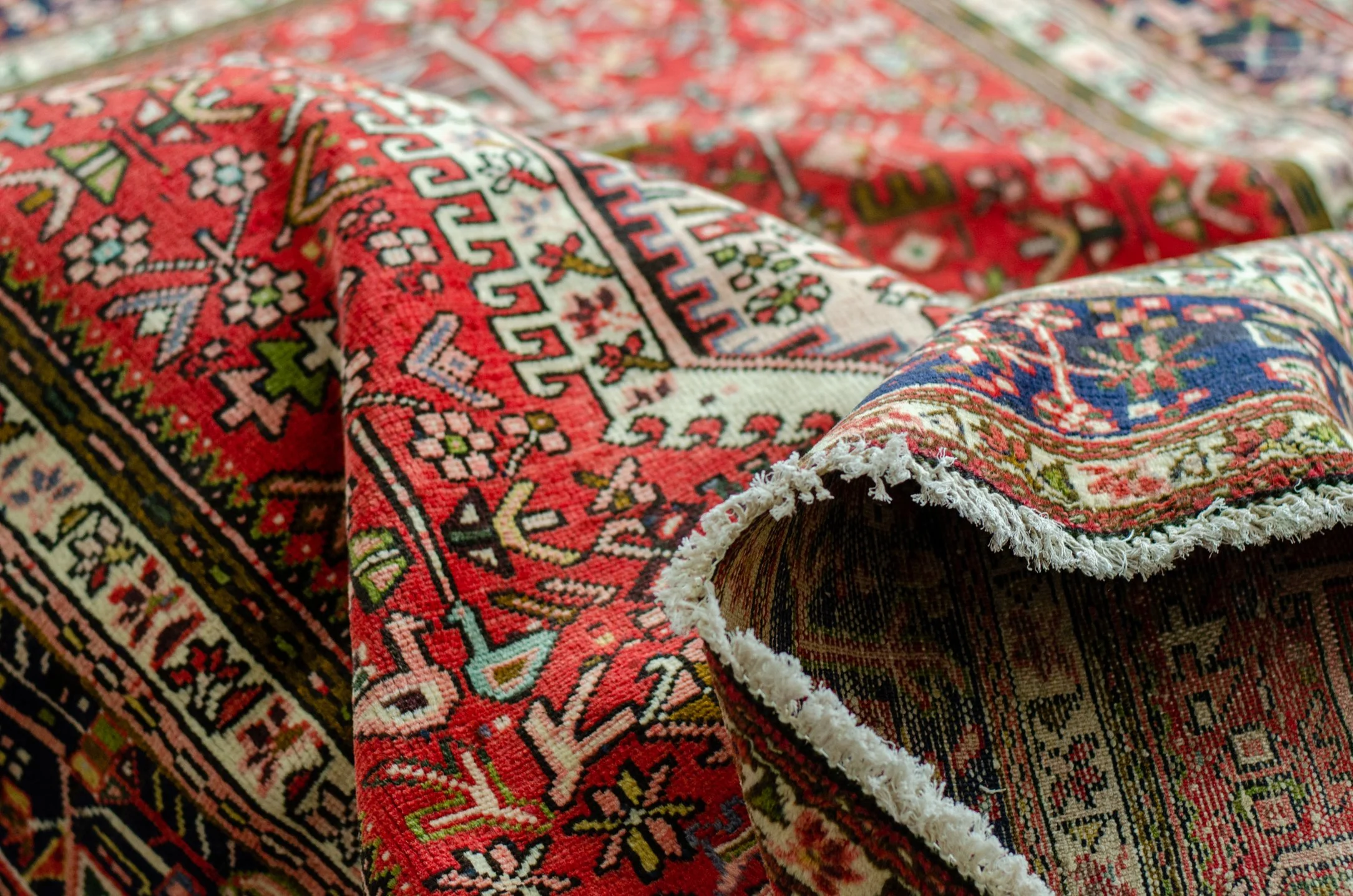
1. Look at the Back of the Rug
The easiest way to determine if a Persian rug is handmade is to flip it over.
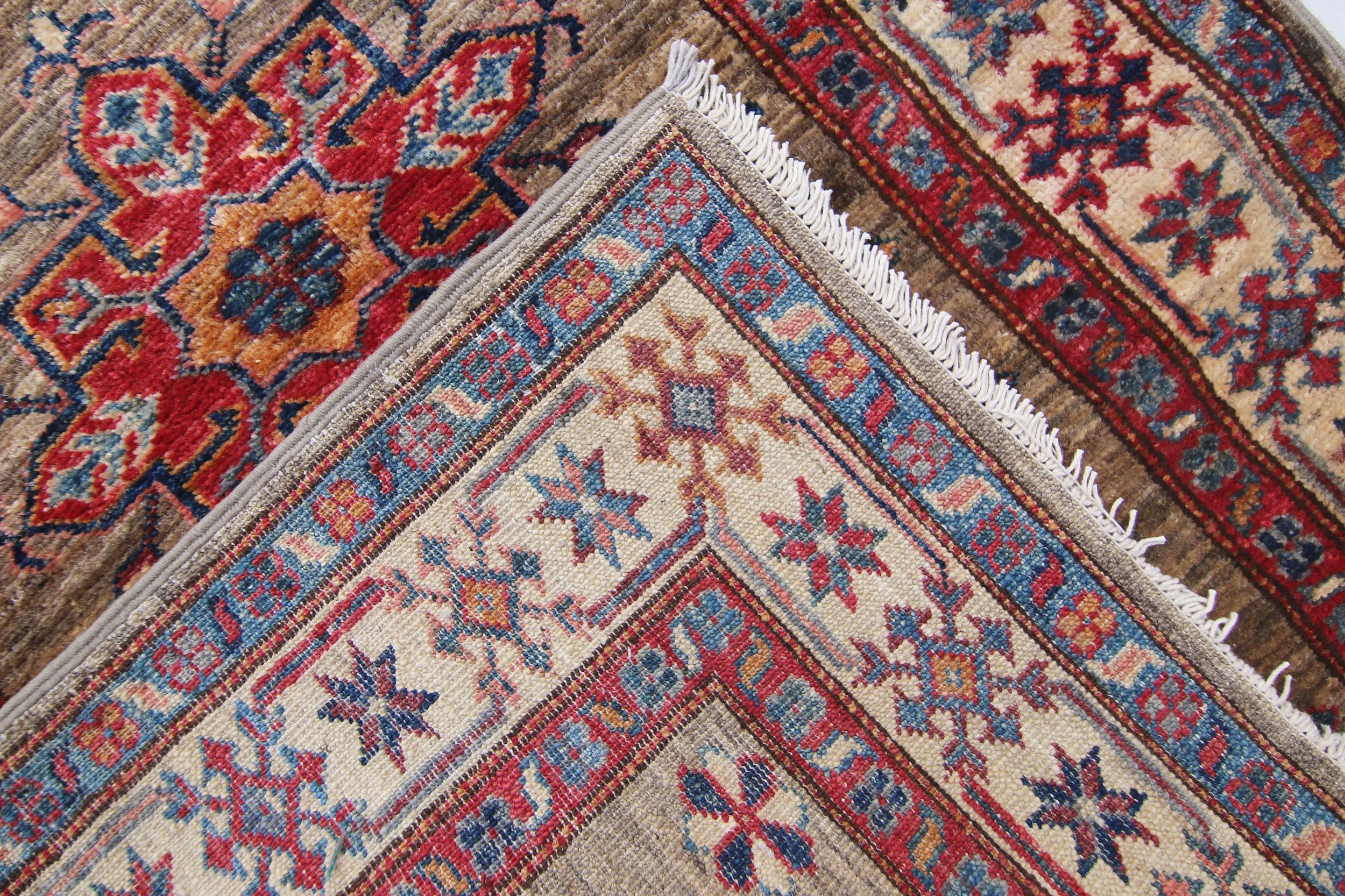
On a hand-knotted rug:
The pattern is visible on the back
The design is clear (though slightly less sharp than the front)
Individual knots can be seen
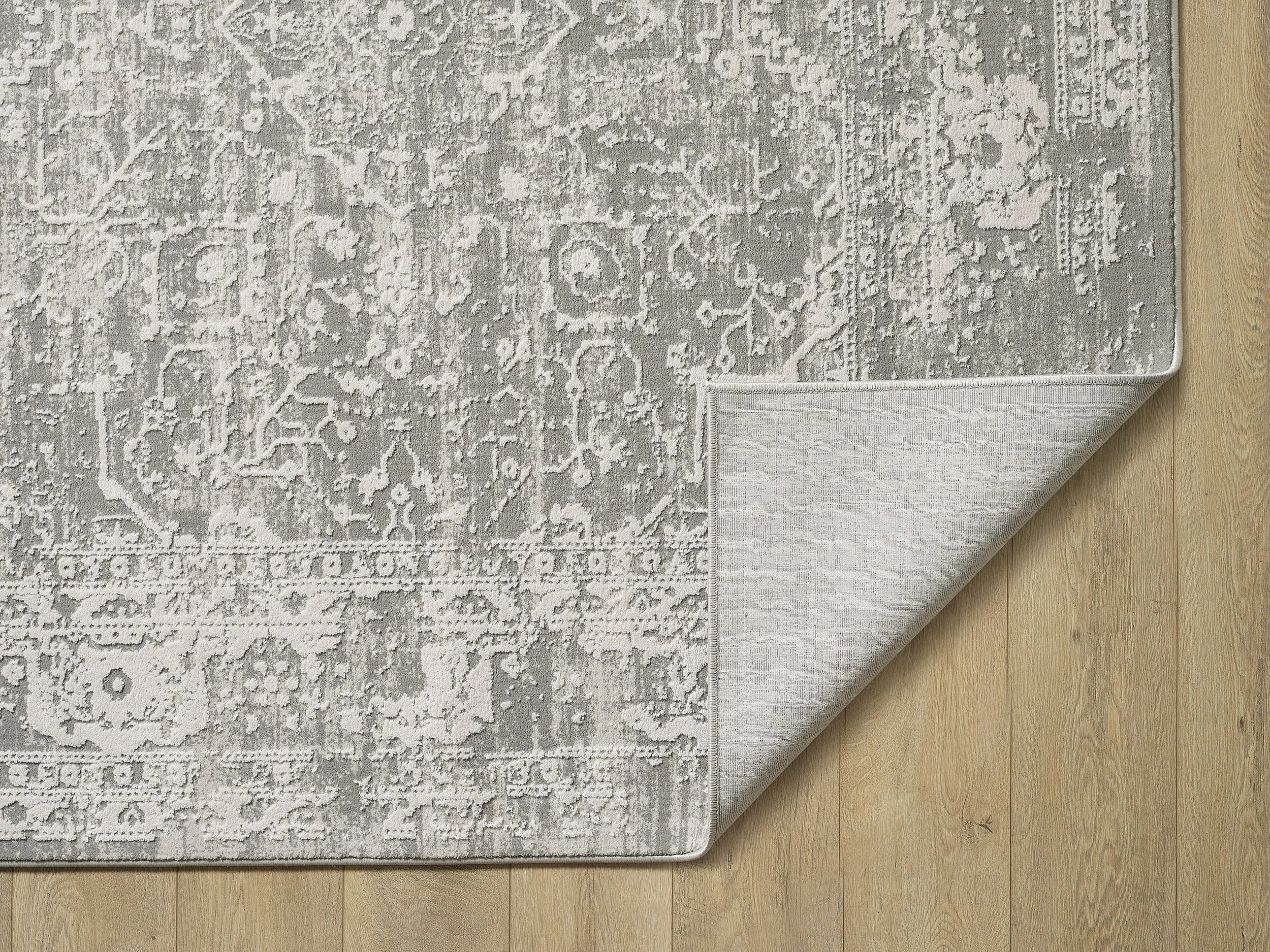
On a machine-made rug:
The backing often has a plastic, mesh, or fabric layer
The design may look printed or overly uniform
Knots are not individually visible
The back of a handmade rug should mirror the front in structure - not be glued or layered.
2. Check for Slight Irregularities
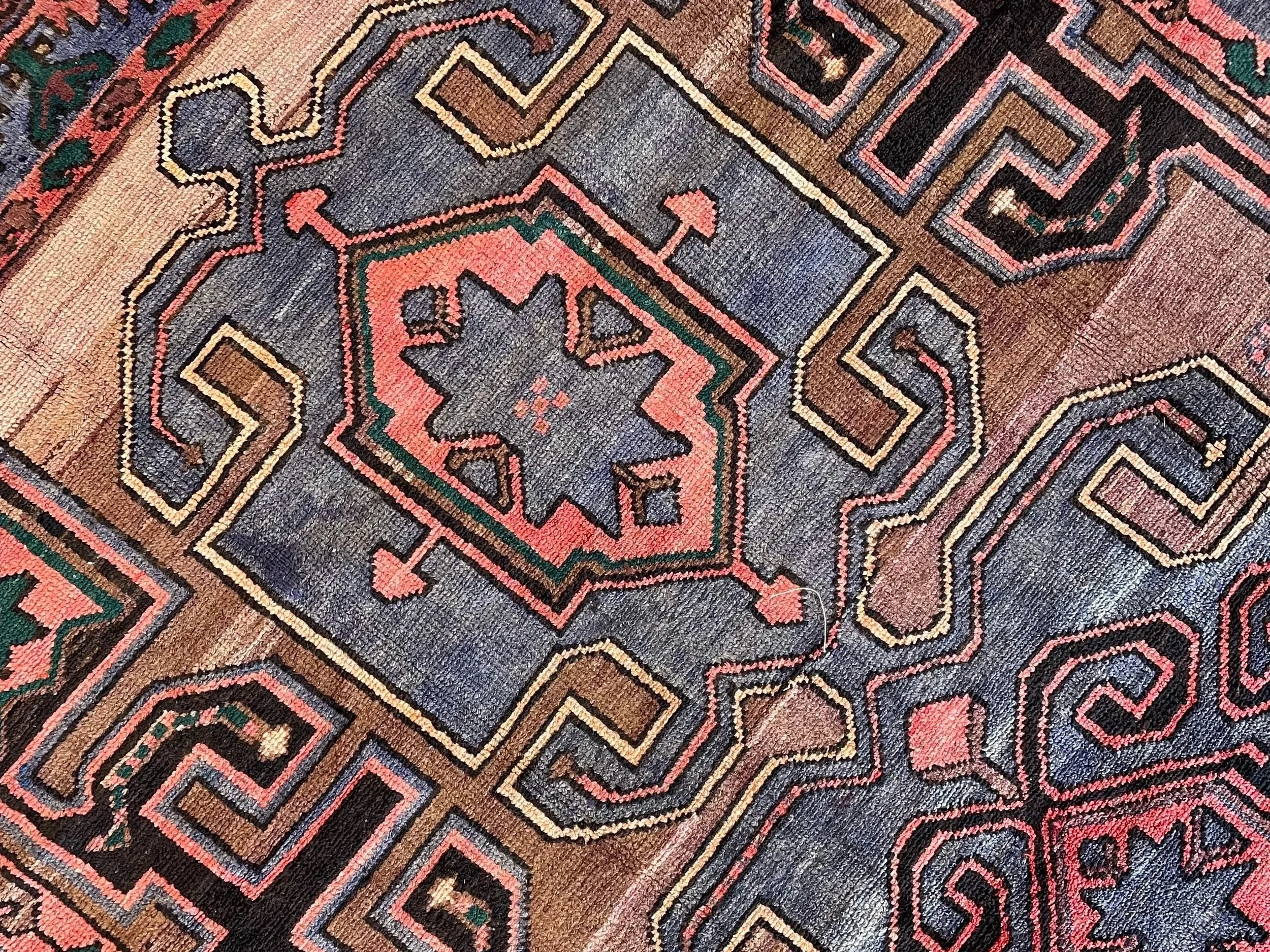
Handmade rugs are woven by artisans, not machines. That means small inconsistencies are normal — and even desirable.
You may notice:
Minor variations in symmetry
Slight differences in border width
Subtle shifts in colour (known as abrash)
These details indicate human craftsmanship. Machine-made rugs are typically perfectly uniform.
3. Examine the Fringe
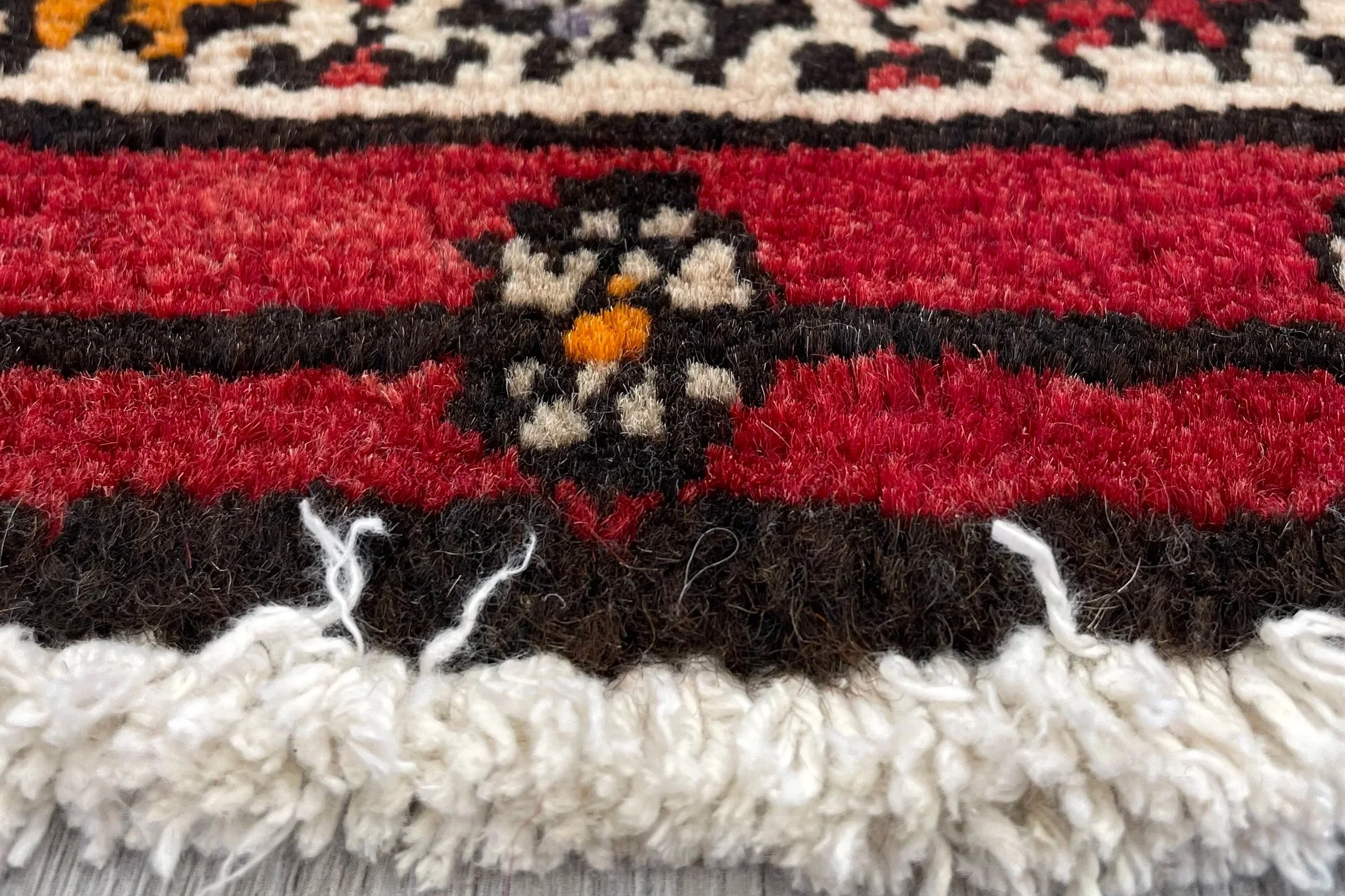
On a handmade Persian rug, the fringe is not sewn on separately - it is actually part of the rug’s foundation. The fringe is formed by the warp threads that run through the entire length of the rug. If the fringe appears stitched or glued onto the edge, the rug is likely machine-made.
4. Feel the Material
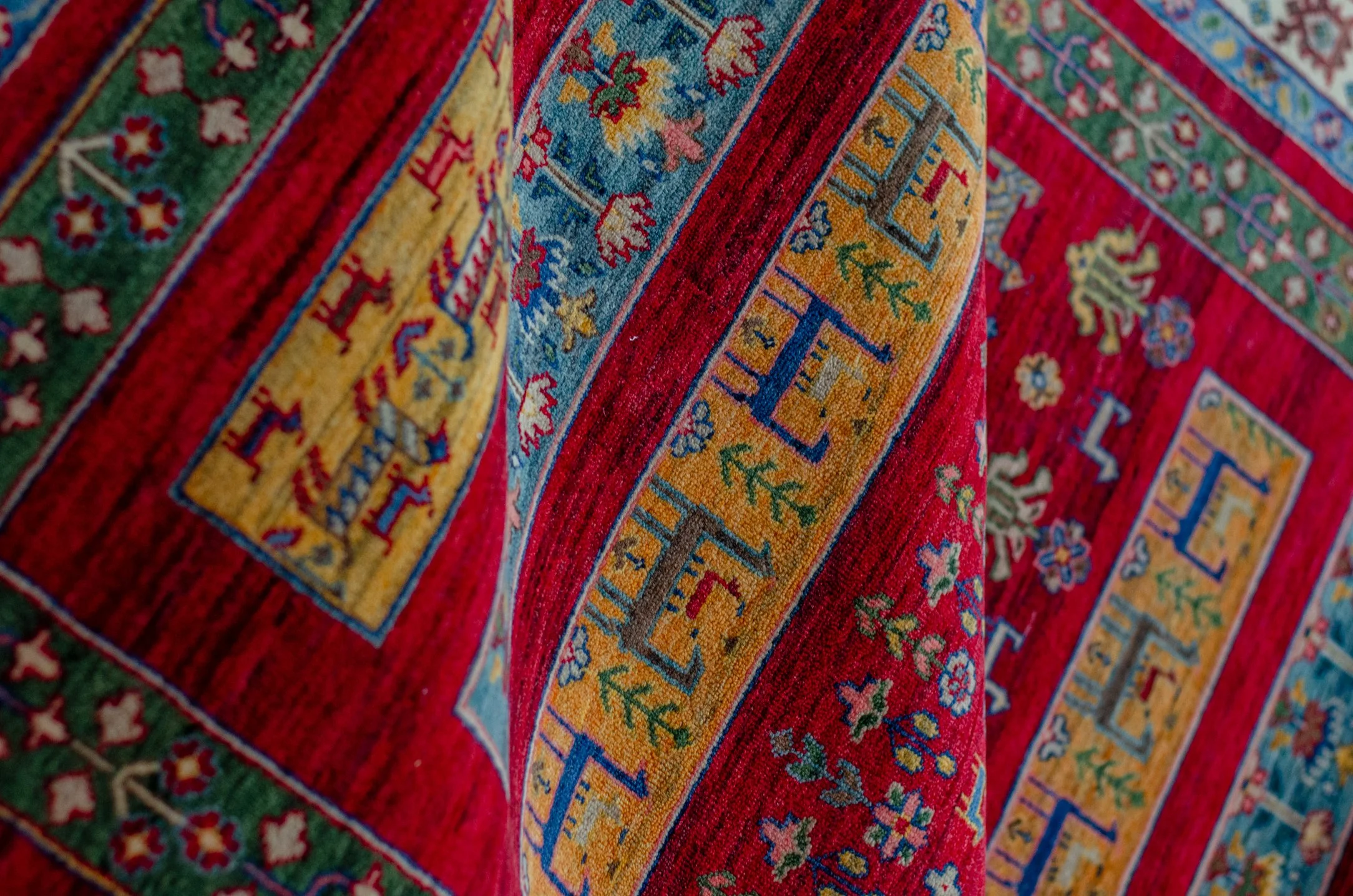
Most authentic Persian rugs are made of natural fibres such as wool, cotton, or silk.
Hand-knotted wool rugs tend to:
Feel dense and substantial
Have a soft but durable texture
Show natural variation in the fibres
Machine-made rugs often use synthetic materials that feel overly smooth, shiny, or lightweight.
5. Look at the Knot Structure
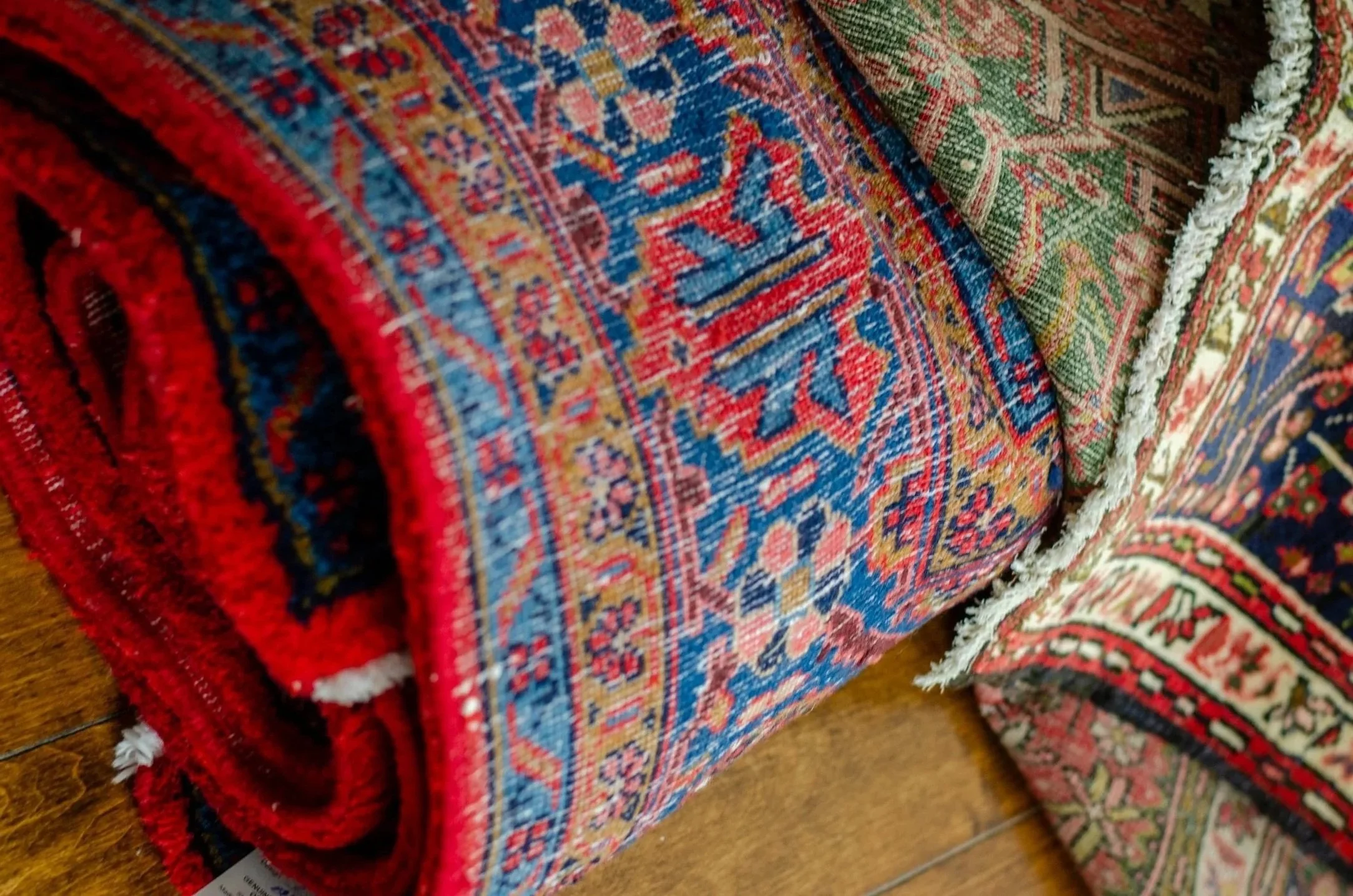
Authentic Persian rugs typically use the asymmetrical (Persian) knot. If you look closely at the back, you’ll see individual knots tied around the warp threads. Machine-made rugs simulate this look but do not have individually hand-tied knots.
6. Consider the Time and Price
A true handmade Persian rug takes months - sometimes over a year - to complete depending on size and knot density. Because of that, it carries a higher price point than a machine-made rug. If a rug is labeled “Persian,” large in size, and priced unusually low, it’s worth examining more closely.
7. Buy from a Knowledgeable Source
Perhaps most importantly, purchase from a reputable seller who can clearly explain:
Origin
Materials
Knot type
Age
Construction method
Authentic handmade rugs come with transparency and expertise. If the seller cannot provide clear information about the rug’s construction, that’s a red flag.
Final Thoughts
To tell if a Persian rug is handmade, look at the back, examine the fringe, check for individual knots, and pay attention to material quality and natural variation. Handmade rugs show subtle imperfections and structural integrity that machines simply cannot replicate. Taking the time to verify craftsmanship ensures you’re investing in a piece that reflects true artistry - not mass production.