Bijar (Bidjar) Persian Rugs: The Iron Rugs of Persia
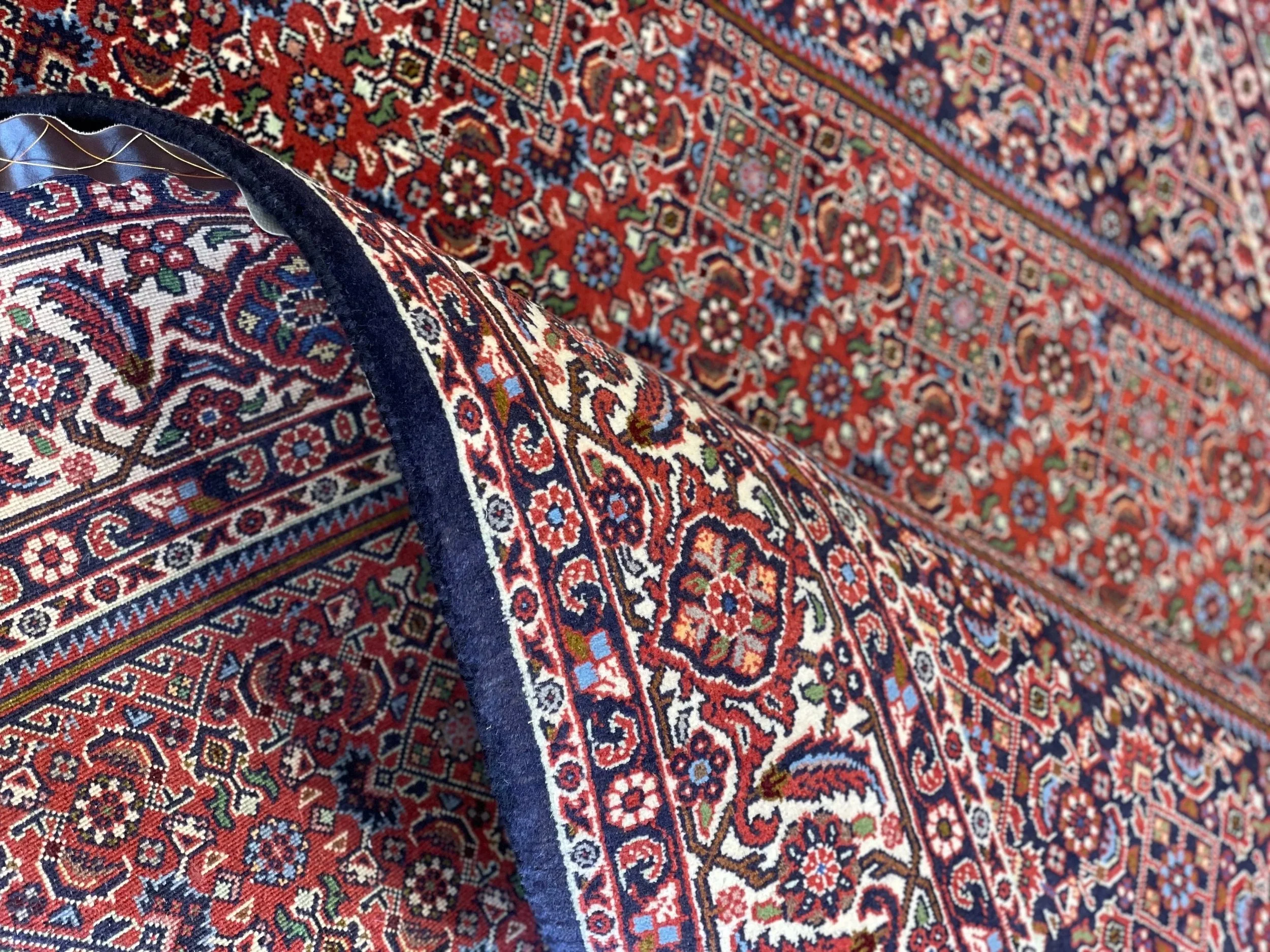
Among the many types of Persian rugs, Bijar rugs stand out for one defining quality: extraordinary durability. Often referred to as the “Iron Rugs of Persia,” Bijar rugs are known for their dense construction, heavy structure, and remarkable longevity. If you’re looking for a handmade rug built to withstand generations of use, Bijar is one of the strongest options available.
Where Do Bijar Rugs Come From?
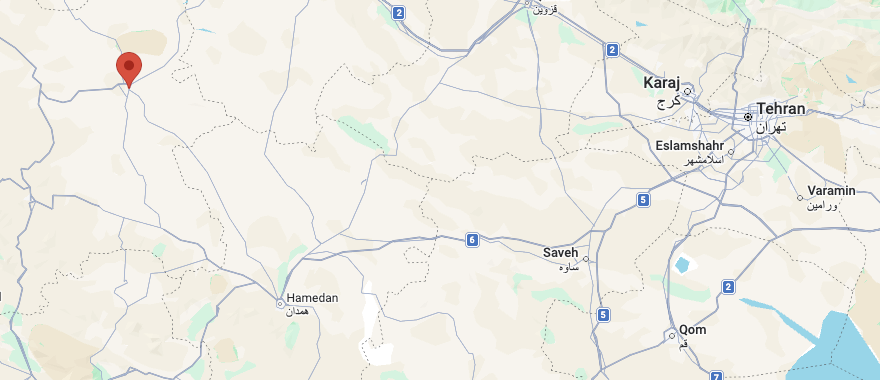
Bijar rugs originate from the town of Bijar, located in the Kurdistan region. The weavers of this area developed a distinctive technique that gives these rugs their unmatched density and firmness.
The alternate spelling “Bidjar” is simply a variation in transliteration - both refer to the same weaving tradition.
A Tradition Rooted in Kurdish Craftsmanship
Bijar rugs are woven within the broader Kurdish weaving tradition of western Persia, where rug making has long been part of village life. In this mountainous region, weaving developed as both a practical necessity and an artistic expression, shaped by generations of semi-settled communities who preserved their techniques over time.
Historically, the Bijar area was also known as Garrous, and older pieces are sometimes described as Garrous Bijars. The weaving culture of this region has influenced surrounding rug-producing centres as well, contributing to a broader legacy of strong construction, confident geometry, and lasting materials that distinguish Kurdish carpets within the wider Persian tradition.
Why Are Bijar Rugs Called the “Iron Rugs”?
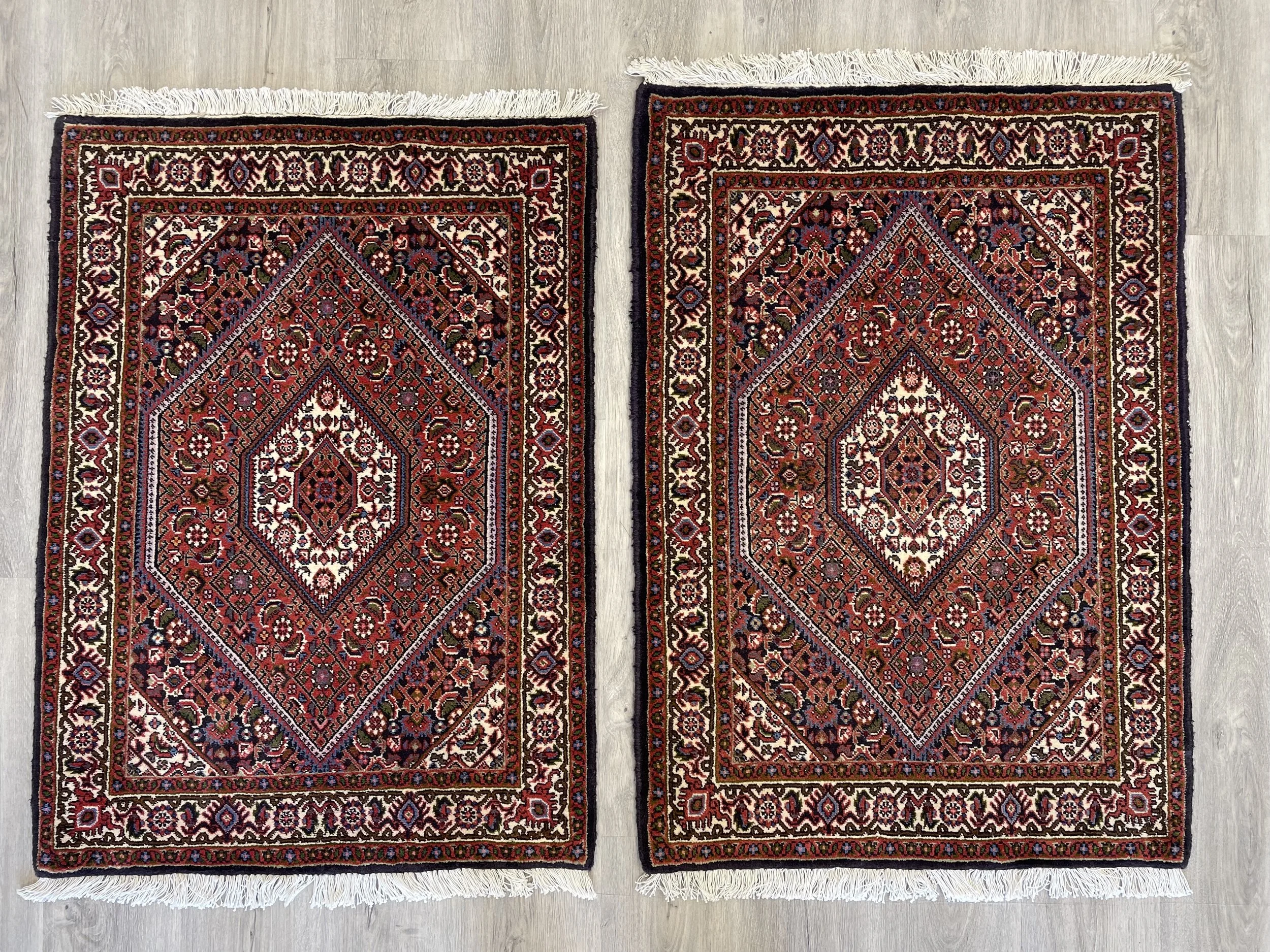
Bijar rugs earned this nickname because of their exceptionally tight weave and heavy structure. During the weaving process, weavers pack the wool knots extremely tightly and use a unique wet-weaving technique that compresses the fibres.
The result:
A very dense pile
A firm, almost rigid handle
Minimal shifting or warping over time
Unlike softer tribal rugs, a Bijar rug feels substantial and structured underfoot.
Construction Details and Materials
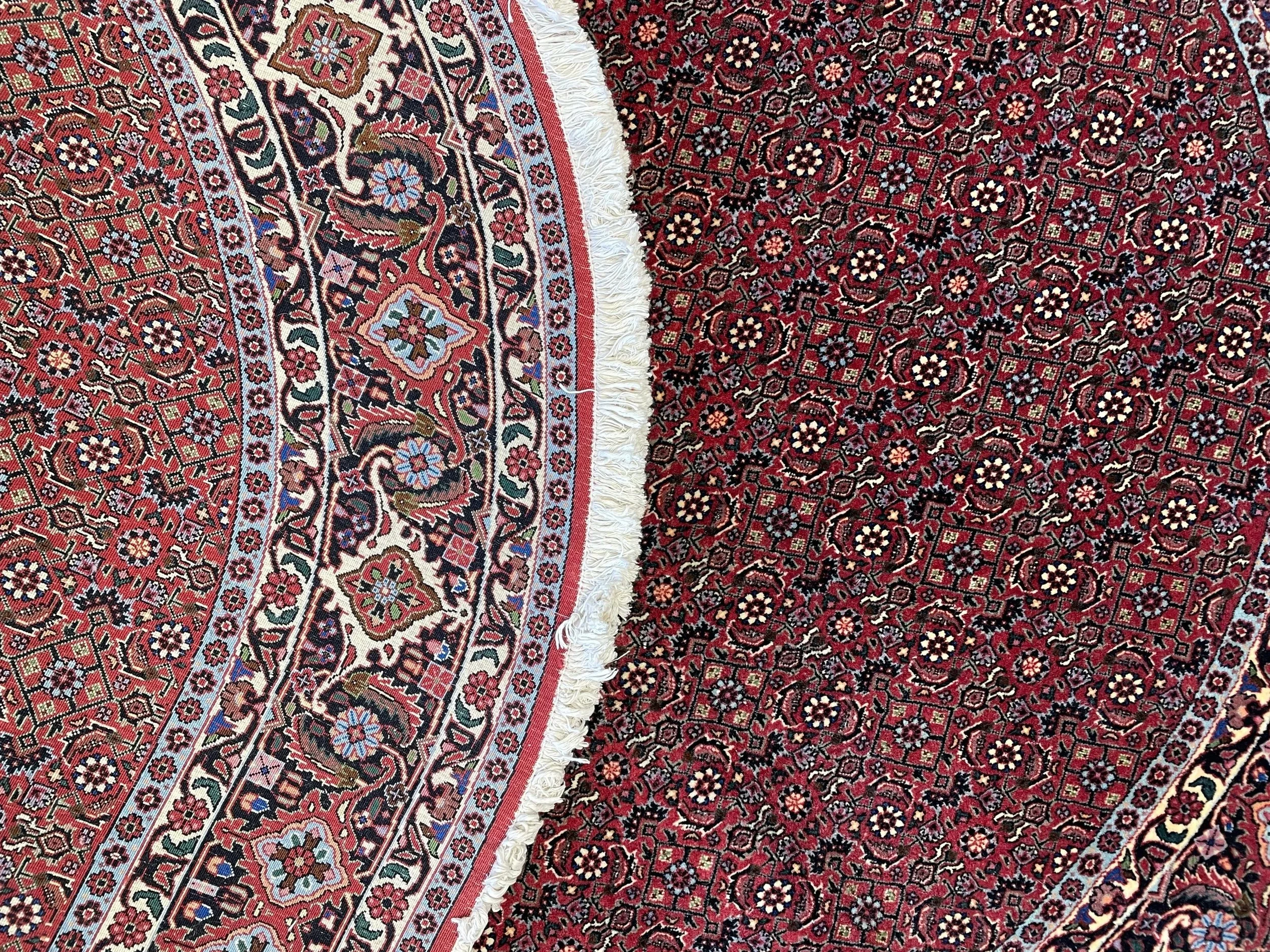
Like all traditional Persian rugs, Bijars are entirely hand-knotted. The pile is wool - valued for its resilience and warmth - typically set on a sturdy cotton foundation. In earlier examples, natural vegetable dyes were commonly used, including madder-based reds that can range from deep crimson to warmer copper tones. These dyes contribute to the depth and character that develop over time.
Bijar rugs are known for extremely tight knotting, achieved through forceful compression during the weaving process. While the knots themselves may not always be as fine as those found in certain city-woven carpets, the density created by this technique results in remarkable weight and durability. When properly cared for, a well-made Bijar rug can withstand decades of regular use while maintaining its structure and visual presence.
Design Characteristics of Bijar Rugs
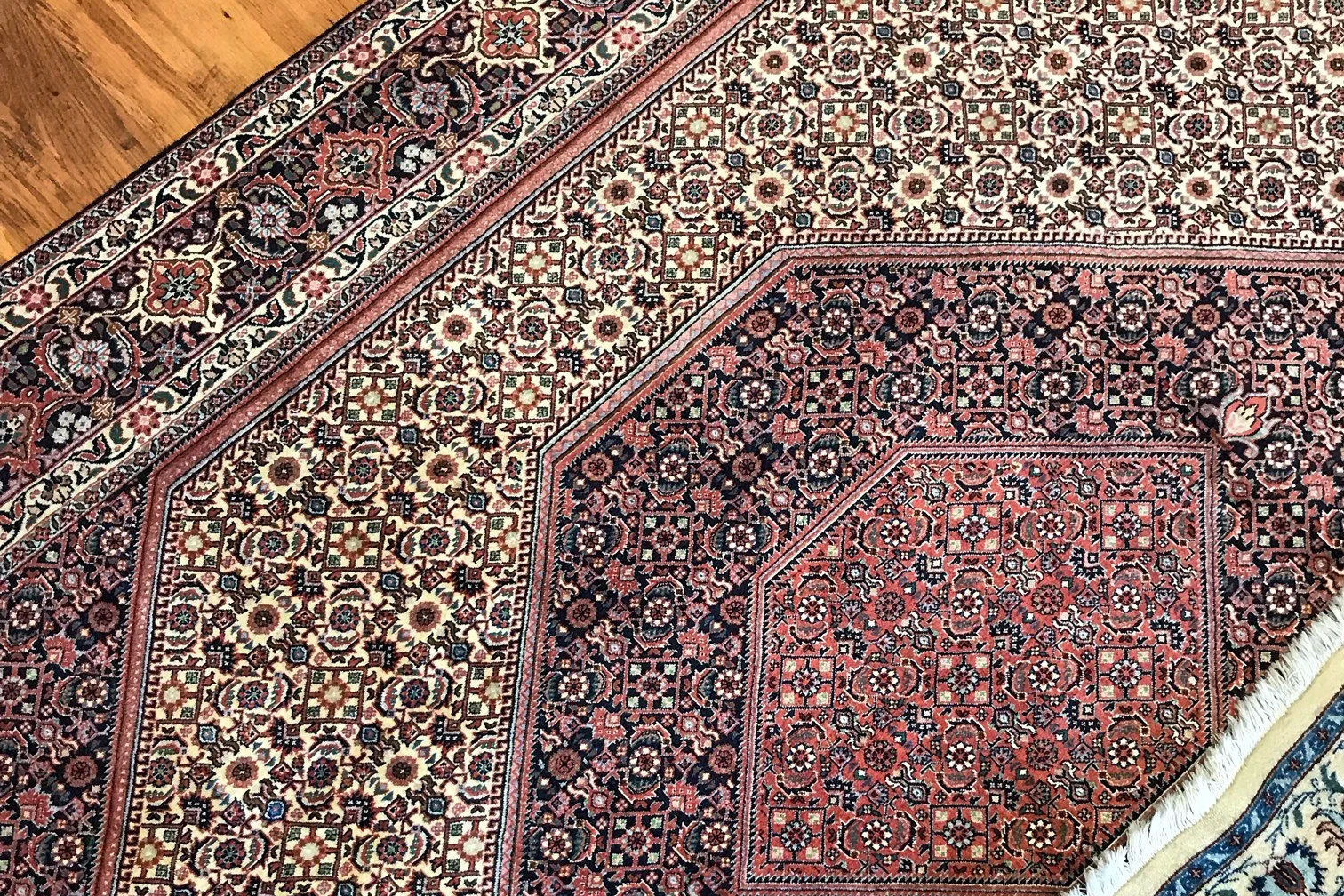
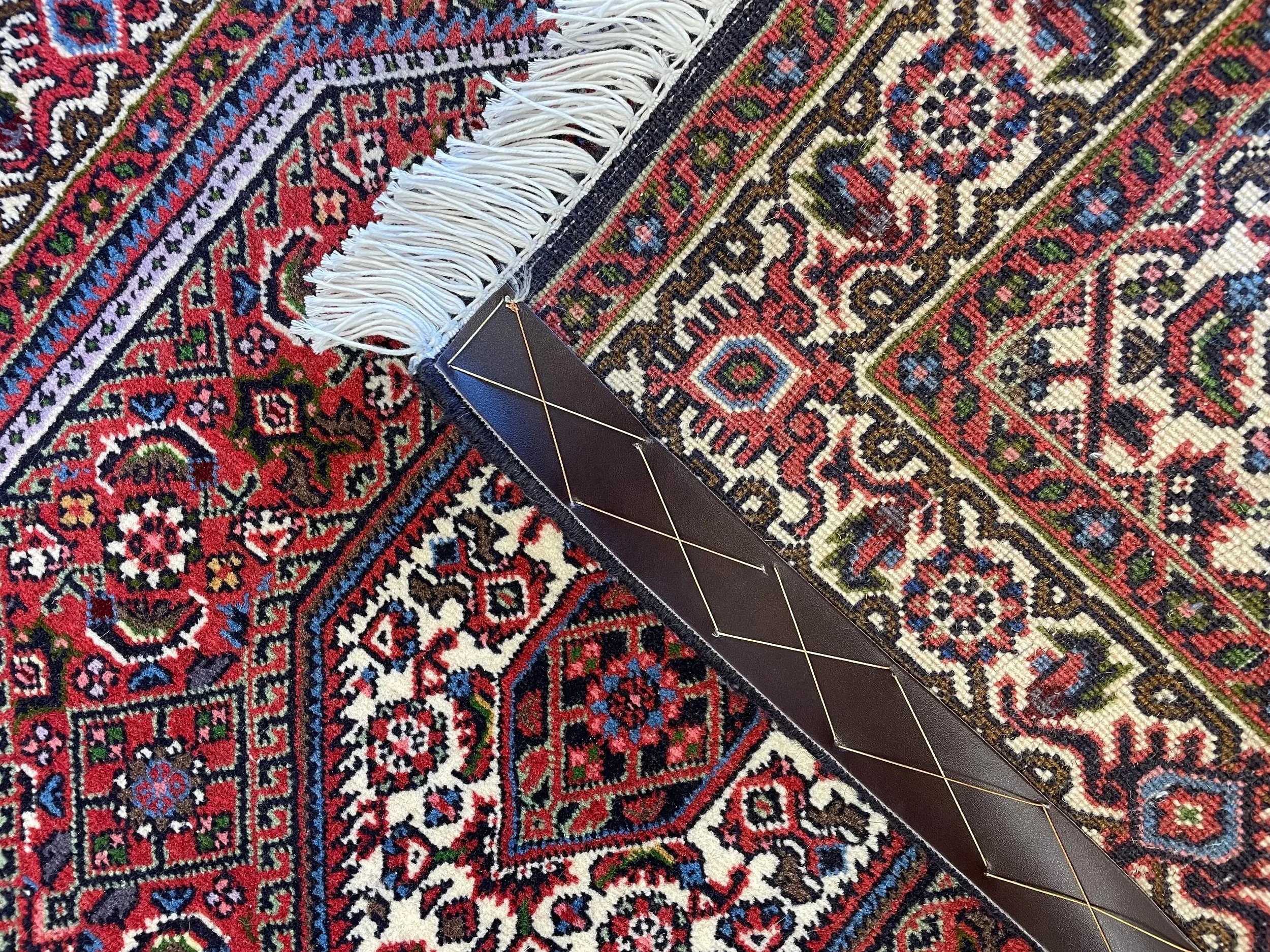
While durability is their hallmark, Bijar rugs are also visually striking.
Common design elements include:
Bold central medallions
Repeating geometric motifs
Herati (fish) patterns
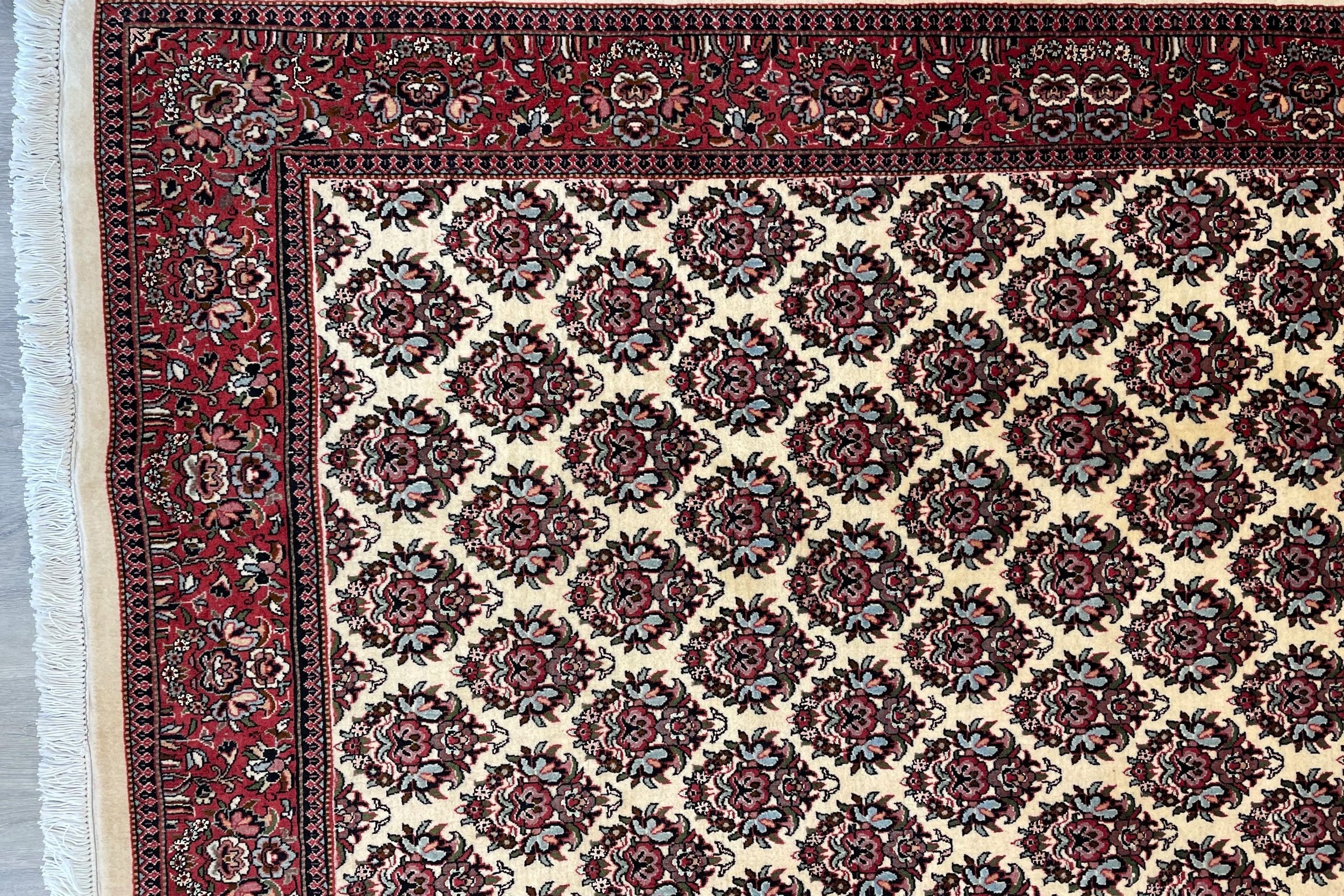
Floral elements arranged in strong, balanced layouts

Colour palettes often feature:
Deep reds
Rich indigo blues
Ivory accents
Earthy tones
The designs feel grounded and powerful, reflecting both tribal and classical Persian influences.
What Makes Bijar Rugs So Durable?
Several factors contribute to their longevity:
High-quality wool
Dense knotting
Heavy cotton foundation
Compressed weaving technique
Because of this construction, even older Bijar rugs often retain impressive structural integrity. For high-traffic areas, a well-made Bijar rug is one of the most practical traditional Persian options.