Antique vs. Vintage Rugs: What’s the Difference?
If you’re shopping for a handmade Persian rug, you’ve likely come across the terms antique rug and vintage rug. While they’re sometimes used interchangeably, they describe two distinct age categories. Understanding the difference between antique and vintage rugs can help you choose the right piece - whether you’re buying for collectibility, design, or everyday use.
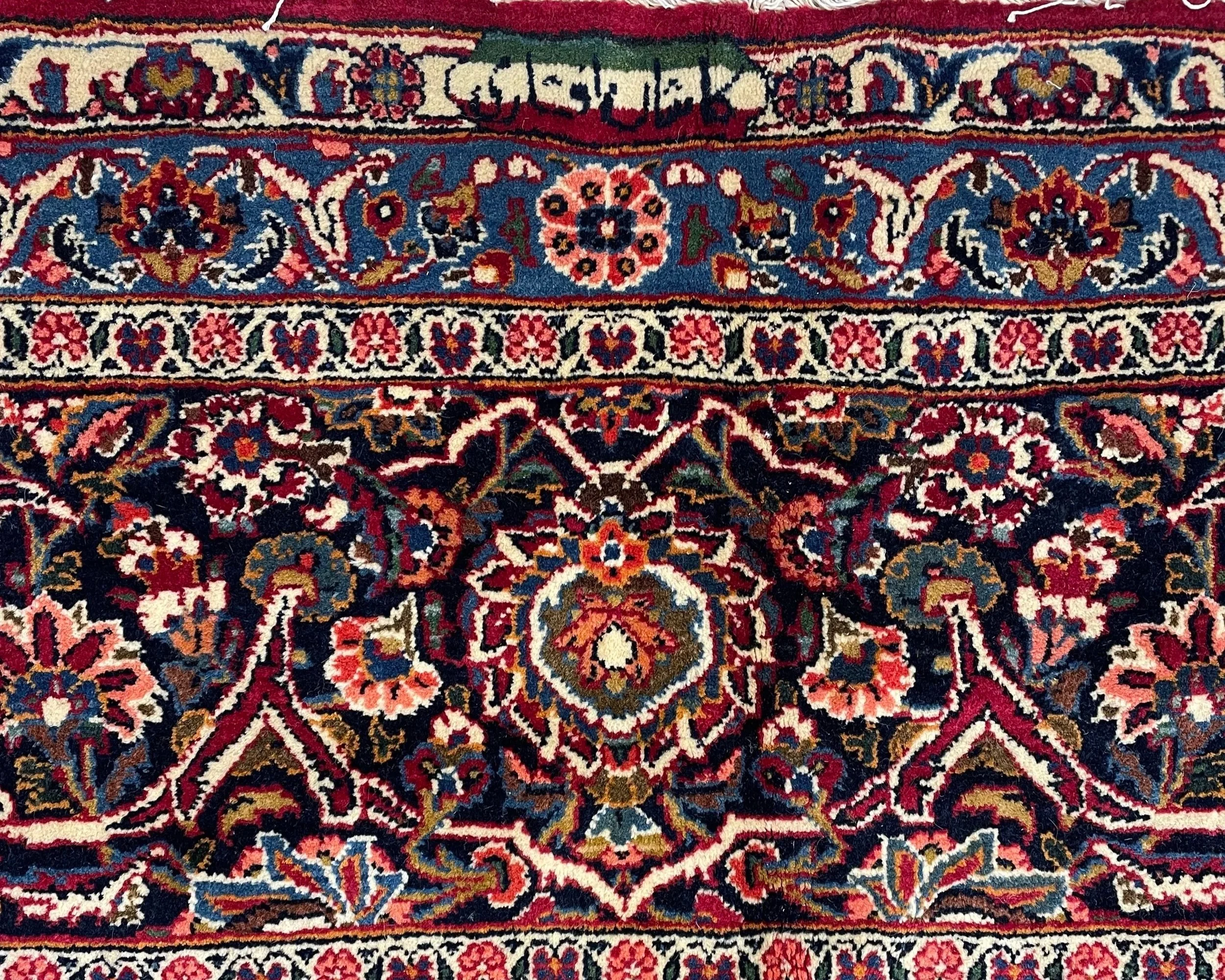
Close-up showing the signature on an antique Kashan Persian rug
What Is an Antique Rug?
An antique rug is generally defined as a handmade rug that is 100 years old or older. These rugs were woven using traditional hand-knotting techniques and natural dyes, long before synthetic materials became common in production.
Many antique Persian rugs come from well-known weaving centres such as Heriz, Tabriz, and Kashan, each recognized for distinct design traditions and weaving styles. Because of their age, antique rugs often display soft fading, patina, and signs of wear that collectors value as part of their character.
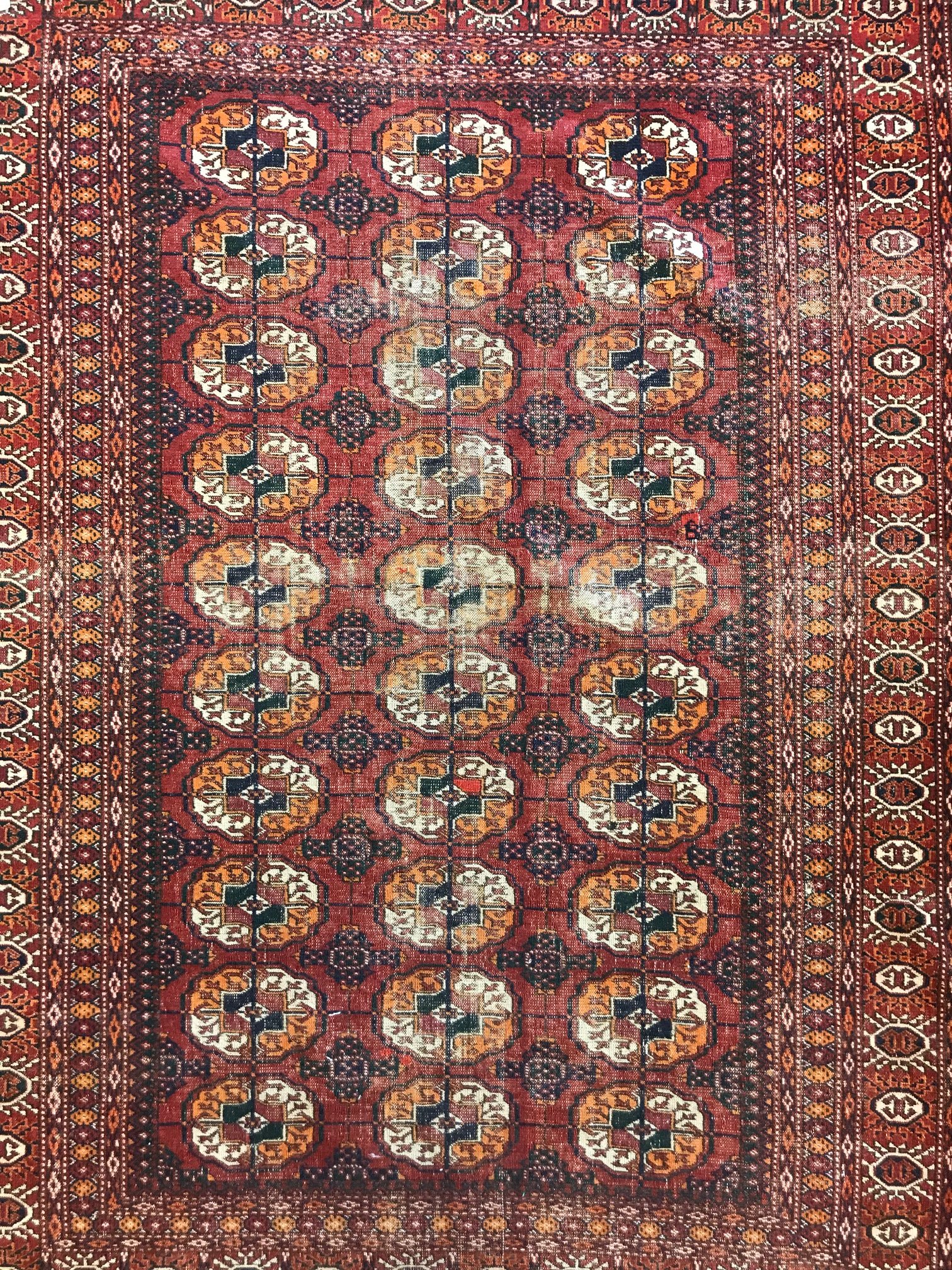
An antique Turkoman Persian rug
Key Features of Antique Rugs:
100+ years old
Hand-knotted construction
Natural dyes and hand-spun wool
Collector appeal and rarity
Visible age-related patina
Antique rugs are often considered high-value pieces, especially when they are in strong structural condition.
What Is a Vintage Rug?
A vintage rug is typically defined as a handmade rug that is between 20 and 100 years old. Like antique rugs, vintage rugs are handwoven and often made with high-quality wool. However, they are not old enough to qualify as antique.
Many vintage Persian rugs were woven in the mid-20th century and may feature slightly bolder colour palettes or more simplified geometric and floral motifs. Because they are newer than antiques, vintage rugs are often found in stronger overall condition while still offering character and age.
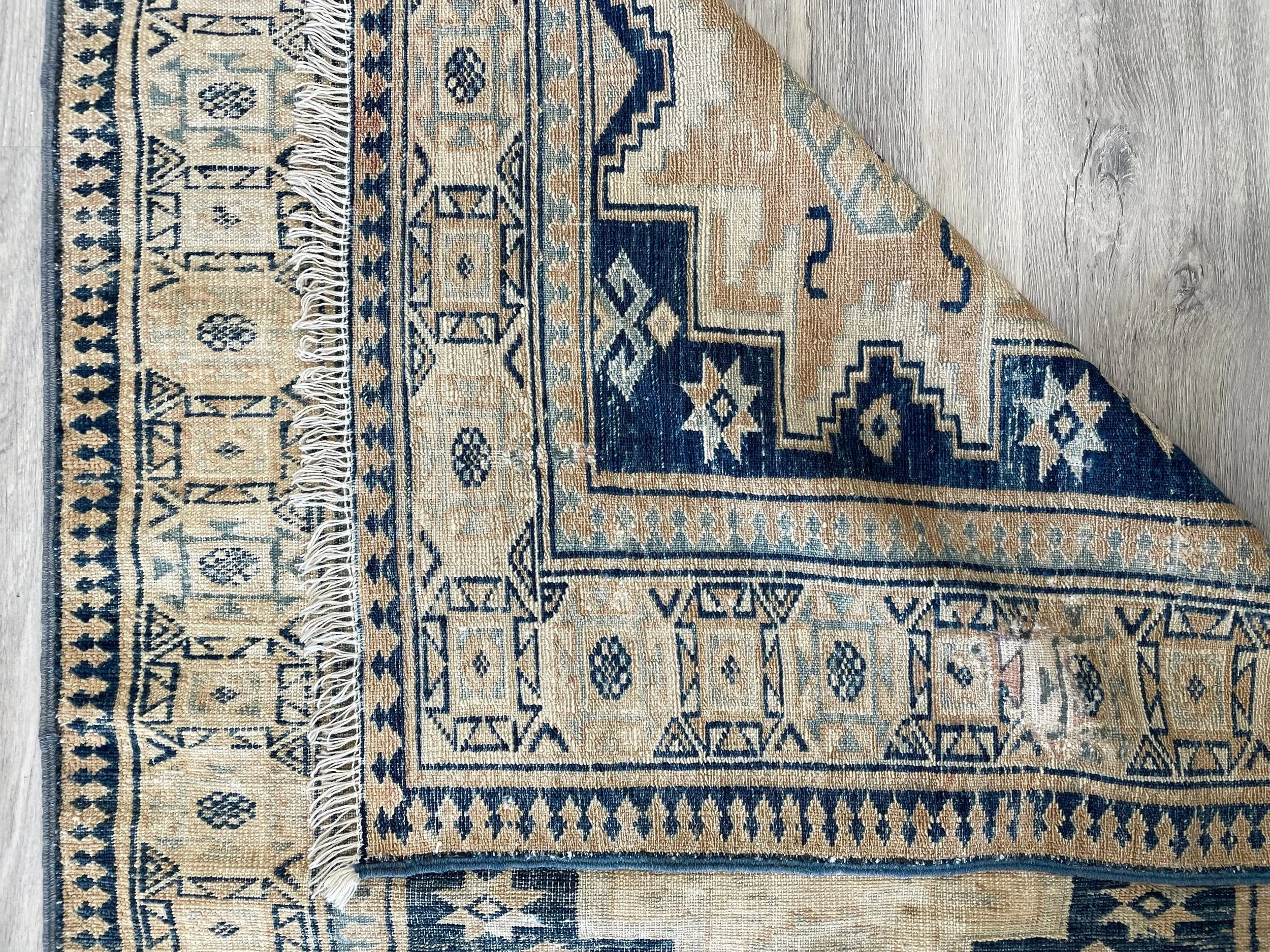
A semi-antique (~50 years in age) Shirvan rug
Key Features of Vintage Rugs:
20-100 years old
Handmade and hand-knotted
Often excellent durability
More accessible pricing than antiques
A balance of character and function
Vintage rugs are especially popular for homeowners who want authenticity and craftsmanship without the higher price point of true antiques.
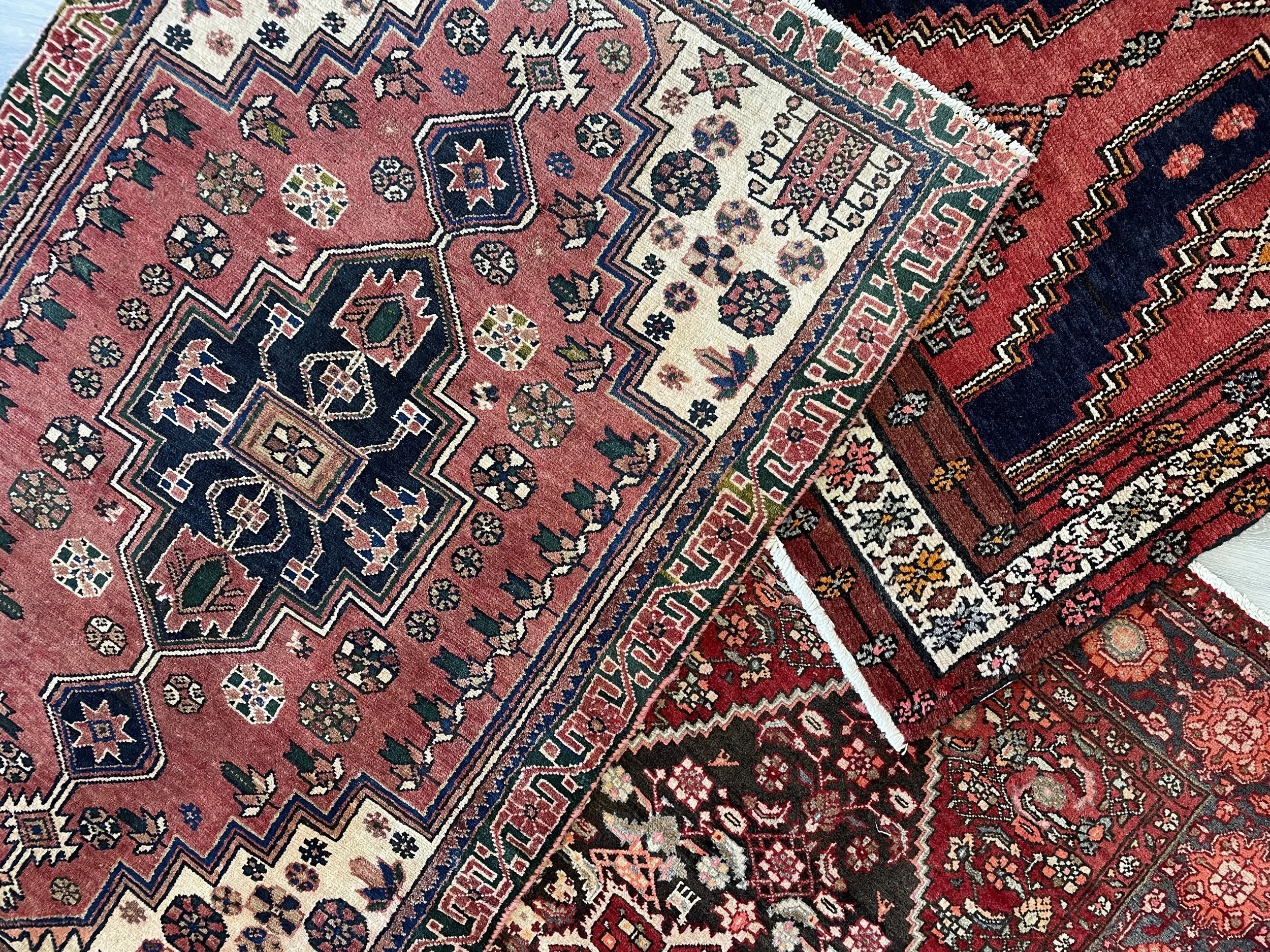
Vintage Persian rugs hand-knotted with wool
Pricing, Rarity, and What to Watch For
It’s also important to understand that antique rugs are typically priced higher than vintage rugs. True antique rugs are rarer due to their age, and fewer well-preserved examples remain on the market. As a result, rarity and condition heavily influence their value.
When shopping for a genuine antique rug, condition is critical. Structural integrity, remaining pile, and original dyes all impact both longevity and price. Because there is a significant difference in rarity and price point between antique and vintage rugs, it’s essential to buy from a knowledgeable and trusted seller. In today’s market, some vintage rugs are incorrectly labeled as “antique,” and the distinction can dramatically affect value.
Understanding these differences helps ensure you’re paying appropriately for the age, craftsmanship, and collectibility of the piece you’re considering.
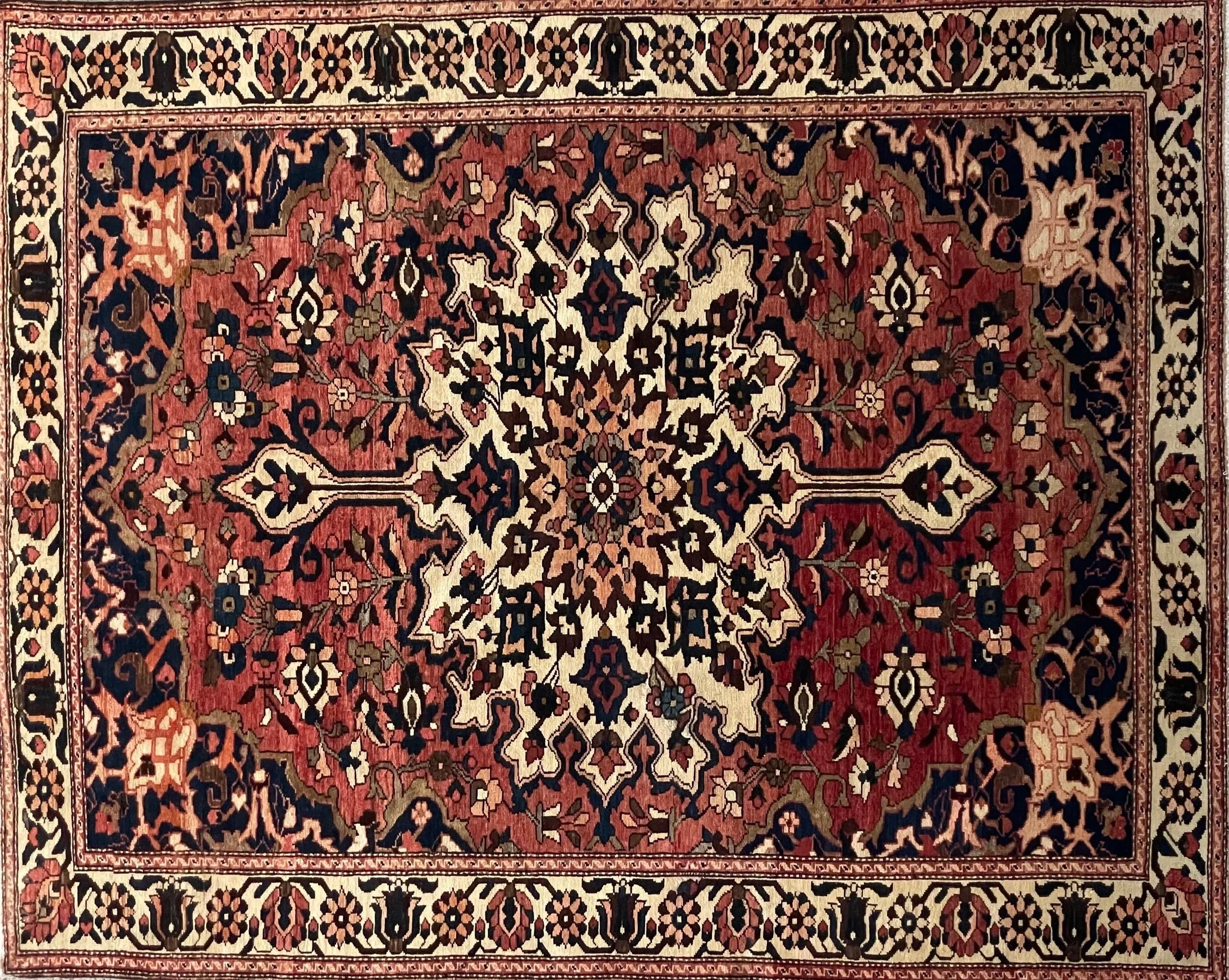
A semi-antique Bakhtiari Persian rug showing natural abrash and soft patina - characteristics that can resemble an antique, though it has not yet reached true antique age.
Final Thoughts on Antique and Vintage Persian Rugs
The key difference between antique and vintage rugs ultimately comes down to age - antique rugs are over 100 years old, while vintage rugs are typically between 20 and 100 years old. That age difference directly impacts rarity, collectibility, and price point. However, condition remains just as important as age; structural integrity, remaining pile, and original dyes all play a major role in determining long-term value.
Because true antique rugs are rarer, they generally command higher prices than vintage rugs. For that reason, it’s essential to understand exactly what you’re purchasing. Paying antique prices for a rug that is technically vintage can significantly affect value, making accurate classification and trusted expertise especially important when investing in a handmade piece.